AUBURN, Ala. — The Jule Collins Smith Museum of Fine Art at Auburn University is thrilled to announce that the second installment of exhibitions for the 2025-26 academic year opens on Tuesday, Jan. 20, at 10 a.m. with free admission. New this semester are three exhibitions featuring outcomes from long-term university-class engagements and statewide outreach. All programming for the semester is curated around a scholarly inquiry into belonging in American art, coinciding with the nation’s 250th birthday.
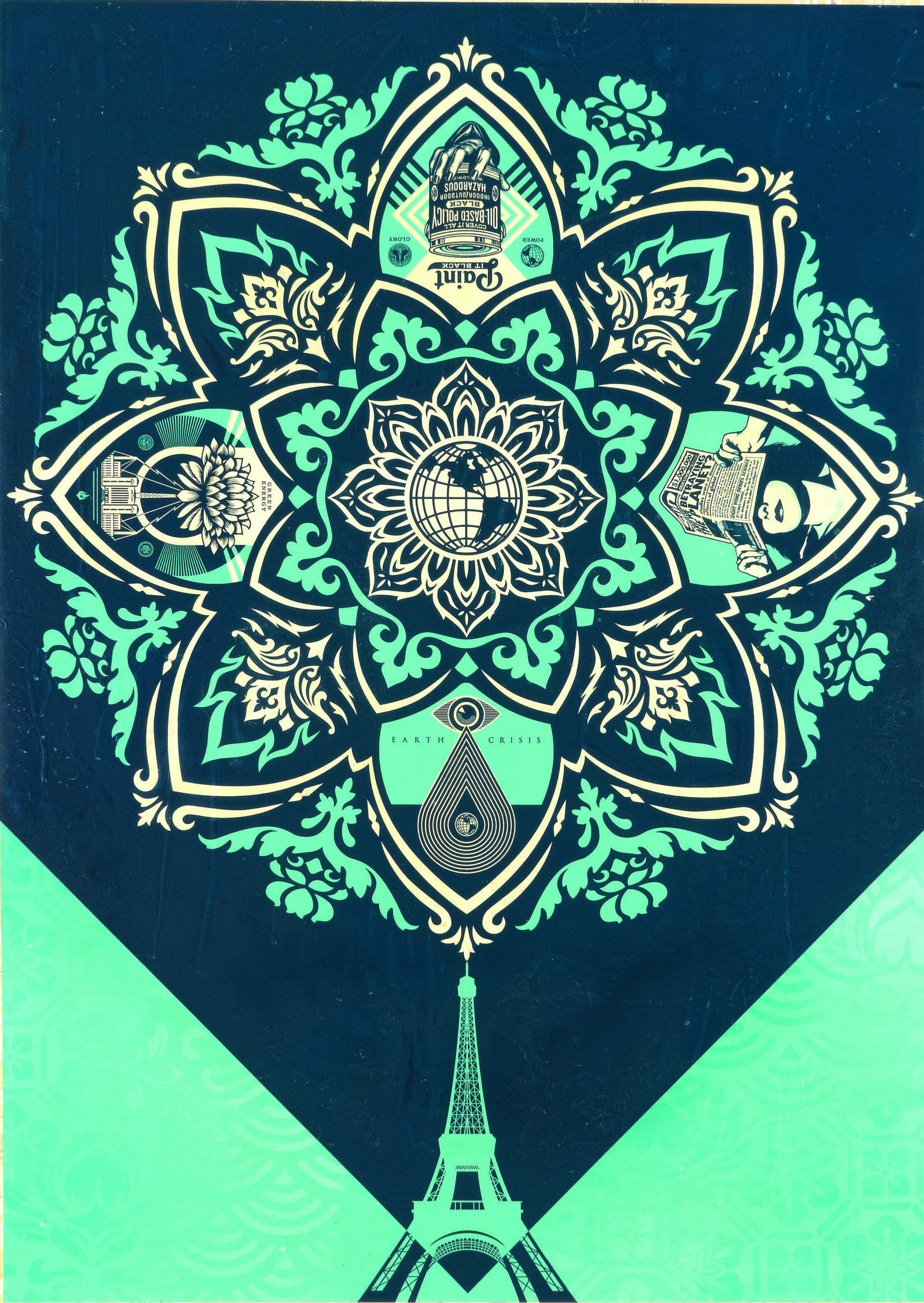
“Facing the Giant—3 Decades of Dissent: Shepard Fairey,” on view through Saturday, May 9, features prints from 1989 to 2019. Fairey’s 30-year career reflects his embrace of punk rock, skateboarding and DIY culture, and has influenced generations of designers and artists. This international touring exhibition provided the museum with an opportunity to tailor a class assignment around the highly recognized street artist and printmaker. Last semester, students led by assistant professor Riva Nayaju visited the museum, researched the artist and responded to the prints with exhibition design proposals. The final graphic design concepts were shared with the museum, who asked Shepard Fairey to weigh in on the student design ideas.
“The ideas that students generated in Professor Nayaju’s Image I class helped transform our thinking about the exhibition design,” said Chris Molinski, Janet L. Nolan Director of Curatorial and Educational Affairs. “The final student project designed by Auburn students Charlotte Blencowe, Morgan Merrett and Kate Eden was selected for this exhibition by Shepard Fairey. The image they produced brings Fairey’s iconic “street art” style into the exhibition as a large-scale wall mural, inserting the architectural scale of his outdoor work into conversation with the screenprints.“
In “Radical Naturalism: Lyric Birdscapes,” curated by The Jule’s poet-in-residence Nicole Sealey, visitors will see “The Birds of America” by James John Audubon alongside poetry from Auburn students and commissioned poems from Donika Kelly and David Baker. In the fall semester, Sealey met with students in Poetry Writing: The Natural, the Social and the Personal led by Rose McClarney, Lanier Endowed Professor in the Department of English. Each student developed original poems in response to the exhibit, contributing their own contemporary perspective on the birds reproduced in Audubon’s prints. The student poems will be on view as part of “Lyric Birdscapes” at the museum alongside audio recordings of the students reading their work through Thursday, July 2.
A third exhibition, “Sew Their Names: Quilting, Creativity and Activism,” also on view through Thursday, July 2, invites visitors to consider artists working in Alabama, and how sewing, painting, printing and other art forms have long served as vehicles for memory, transformation and creative advocacy. The group exhibition features quilts by Mercedes Braxton, Wini McQueen and Yvonne Wells alongside work by Bill Traylor, Noah Purifoy and the Lowndes County Freedom Organization.
“This exhibition is the culmination of a multi-year statewide engagement,” said Christy Barlow, assistant director of education, engagement and learning. “The Jule presented exhibitions and quilting workshops in Hale County and Florence, Alabama with the organization, Sew Their Names.” Barlow said that “Oh Freedom,” by Mercedes Braxton, includes blocks hand-stitched by Auburn students and local residents. “The quilt is a living memorial to people who were enslaved and whose names were only recorded in the Alabama Baptist Archives.”
Also through July 2, the story of The Jule’s foundational Advancing American Art collection continues to evolve with the latest iteration of “Being and Belonging in American Art: 1946/2026,” guest-curated by the University of South Alabama’s Elizabeth S. Hawley, PhD. Featuring new object pairings such as nuclear era-referenced works by Irene Rice Pereira and Cara Despain that incorporate phosphorous paint and uranium oxide, the exhibition continues to ask visitors to compare what defined “American” in 1946 with what they see in contemporary art.
In the museum’s Bill L. Harbert Gallery, “Women Artists in Ascendance” shines a light on the radically transformed processes of the visual arts in the wake of World War II and the sometimes-overlooked women of the art world who were themselves titans. Named for the LIFE 1957 article that recognized their artistic contributions, the exhibition echoes the original vision of the 1946 Advancing American Art exhibition, celebrating the resilience and innovation of artists across generations. In addition to works by Helen Frankenthaler, Grace Hartigan, Lee Krasner and other artists borrowed from institutions such as the Whitney Museum of American Art, objects featured from Auburn’s collection are by Alice Baber, Louise Nevelson and Mildred Thompson.
In addition to new exhibitions, Auburn’s art museum continues to offer daily public tours at 5:00 p.m. from the museum’s cohort of student guides, geared for visitors of all ages, knowledge levels and interests. Monthly programming also includes the Auburn Forum for Southern Art and Culture, with a 9 a.m. quilting workshop and 2 p.m. sessions based on the “Sew Their Names” Exhibition on Saturday, Feb. 7; an Artist Talk with Cara Despain moderated by Elizabeth S. Hawley on Thursday, March 19 at 5 p.m.; and a demonstration by the Dana Tai Burgess Dance Company of their original performance inspired by the work of Helen Frankenthaler on Thursday, April 2 at 5 p.m. Visit jcsm.auburn.edu for more information as well as information on booking a class tour or connecting with the museum’s education, engagement and learning unit.